The continent where the brothers live, in the Northern Hemisphere. It had no native humans; humans “discovered” it 400 years ago. Its native peoples are the orcs and all the goblinoids, along with various elven and dwarven nations.
The world of Taralor
Thirteen colonies. A hundred and sixty years of history
Taralor has been played at the table for decades. This page is where that world will be written down for you, a little more with every Tale.
The lands
ContinentEozia
ContinentKar Vora
A large continent in the southern hemisphere and home to the Holy Empire of the Eagle, among other kingdoms. All humans came from here and are colonizers in other lands. It was named by the dwarves, who consider themselves the firstborn of the world.
KingdomTaralor
An independent kingdom founded by human colonists, famous for extending citizenship to non-humans, orcs and lizardfolk among them. Everyone is welcome, as long as you follow the law and pay your taxes. The brothers are immigrants who live here now.
PeoplesThe goblins
Natives of Eozia, like the other goblinoids. Unlike the orcs, goblins were never able to coexist with humans. The history of the two peoples is one of bloodshed and violence.
Places
VillageDurngar
An old dwarven town, now home to humans. Where Powder and Wool begins.
CityWanor
Where small people struggle against a system that uses them as a resource.
CityLarzam
A port city, and Rana’s home.
CapitalTaralor
The capital of the kingdom, and one of its five great cities.
CityTerenchia
Being written.
CitySoldum
Being written.
A short history
- 400 years agoHumans reach Eozia
Colonists from Kar Vora “discover” a continent that already has many peoples of its own.
- Year 501King Melkaron founds Taralor
King Melkaron Serpentlayer, an ally of the dwarves, founds the kingdom 161 years before our story. An almost mythical and much respected figure.
- Year 657Goblins raid Durngar
The old dwarven town, home to humans by now, is raided. The village never quite recovers.
- Year 662Powder and Wool begins
Five years after the raid, two brothers are still living in Durngar.
People
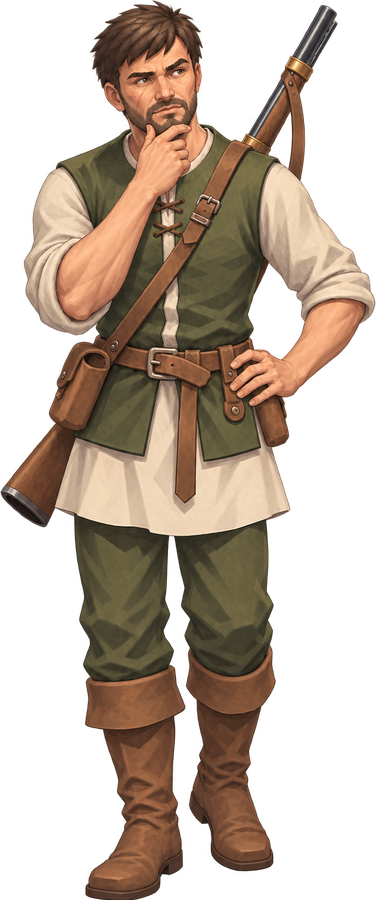
A former army scout, now the shepherd of Durngar.
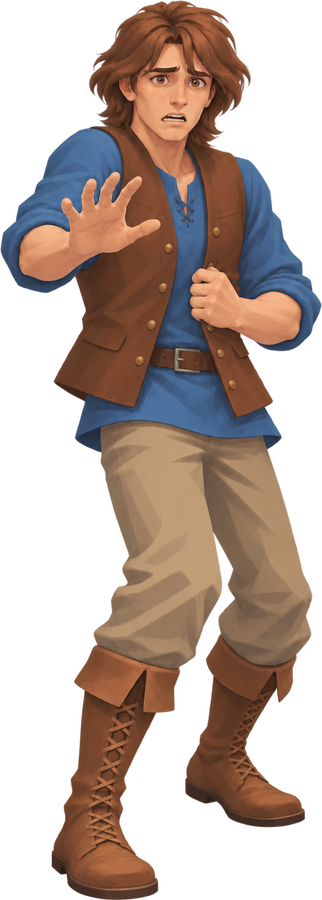
A former army medic, now the village healer, and a druid.
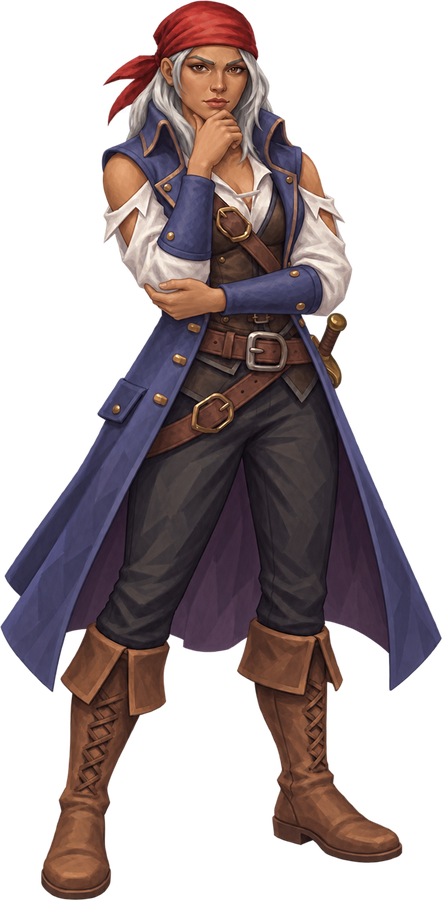
Sailor, smuggler and alchemist, an orphan from Larzam.
The Pantheon
Seven gods are worshipped across Taralor. Some are loved and some are feared. Open one to read its story.
Caring MotherMother of all, keeper of hearth and harvest
Caring Mother is the benevolent guardian of ordinary life. She watches over mothers in childbirth, farmers tending their fields, children growing beneath their parents’ roofs, and villages whose inhabitants have lived together for generations.
She is a goddess of unconditional love, but not unconditional approval.
To Caring Mother, civilization rests upon sacred obligations: parents must protect their children, children must honor their elders, neighbors must care for one another, and communities must preserve the customs that have sustained them.
Her love is boundless, but her expectations are firm. She believes that happiness comes not from pursuing individual desires, but from fulfilling one’s responsibilities to family, community, and the natural order.
As such her faith is deeply conservative but not inherently cruel or intolerant. Mother knows what is best for her children and that makes her quite rigid. She is the defender of traditional pastoral life in a world of change.
Can her dogma hold in the times of the Great Mechanization? Only time will tell.
Lord TyrantGod of Dominion, Fealty and Unwavering Obedience
Lord Tyrant embodies the sacred bond between ruler and subject. He teaches that authority is earned through strength, that loyalty is the foundation of civilization, and that obedience is the price of protection.
He is not a god of wanton cruelty or destruction. To those who kneel before him, he is a steadfast protector, much as a lord shelters his household. In return, he demands absolute loyalty, honorable service, and unquestioning obedience.
The bond states that the lord must protect those below him who owe loyalty to the lord in return. A ruler who abandons his subjects is as contemptible as a vassal who breaks his oath. Mercy may be granted to a defeated enemy, but never to a traitor.
His followers believe that peace comes through hierarchy, justice through strength, and prosperity through unwavering order. Lord Tyrant keeps faith with his own and breaks without mercy those who violate his law.
Those who know how to kneel will never stand alone.
Can the sacred bonds of fealty and absolute obedience endure in a world increasingly shaped by machines, commerce, and ambition? Only time will tell.
Great SpiritThe Ancient One, Keeper of Rot and Bone
The legends say the Great Spirit was in the world before humans, before dwarves and elves and even before the gods. It will still be here when all the gods are gone.
Great Spirit is Birne’s patron deity. Neither male nor female, neither benevolent nor cruel, the Spirit rules over the wild and untouched corners of the world. Older than civilization itself, it holds little regard for the ambitions, laws, or sufferings of humankind.
To Great Spirit, life and death are inseparable. The wolf that devours the deer, the roots that consume the fallen tree, and the fungus that feeds upon a rotting corpse are all expressions of the same sacred order. It grants life as readily as it takes it away, without malice, compassion, or judgment.
Ancient and unforgiving, Great Spirit embodies growth, hunger, rot, and decay alike. Its followers do not seek its love or protection, for the Spirit makes no promises. They revere it because all living things, from the smallest insect to the mightiest king, must eventually return to its embrace.
When Birne curses “Rot and Bone,” it is not mere profanity, but a prayer whispered to the old power that watches from the deep woods.
For countless ages, Great Spirit has endured the rise and fall of civilizations, indifferent to the fleeting works of mortals. Yet the advance of industry threatens to transform even the wildest reaches of the world.
Whether Great Spirit will remain indifferent to these intrusions, or awaken to reclaim what was once its own, remains to be seen.
EagleThe Watchful Guardian, Protector of Mother
Son of Caring Mother and a mortal, Eagle is the divine protector of the world, the dutiful son of Caring Mother, and the patron deity of soldiers, knights, and those who take up arms in defense of others. Where his Mother nurtures and preserves life, Eagle stands ready to defend it, with sword and shield if necessary.
He teaches that strength is a sacred responsibility, that courage means standing against overwhelming odds, and that the highest honor lies not in conquest, but in protecting those who cannot protect themselves.
Unlike his Mother, Eagle is a progressive deity. He recognizes that the world must change and that traditions, however ancient, must sometimes give way before necessity. To him, duty is not blind obedience, and honor is not unquestioning loyalty. A soldier’s first obligation is to protect the world, even when doing so requires defying kings, institutions, or the gods themselves.
Eagle is widely revered among the armies of the Holy Empire, particularly its knights and professional soldiers. His eagle emblem adorns breastplates, shields, banners, and helmets, its outstretched wings symbolizing vigilance and protection.
In a time of change, Eagle wants to protect the mortals who revere him. If that means the old institutions are broken, so be it. Eagle will be there to establish the new order.
HorseflyWinter in Spring, Death in Life
Horsefly is the goddess of pestilence and transformation, born of Lord Tyrant and a mortal woman whose body she devoured during her own birth. Neither wholly divine nor wholly mortal, Horsefly possesses only a fraction of the power of the prime gods, yet her ambitions surpass those of nearly all her divine kin.
Where other gods seek to preserve, protect, or govern the world, Horsefly seeks to change it.
To Horsefly, disease is not merely an affliction, but an instrument of transformation. Pestilence destroys the weak, mutation produces the unexpected, and suffering forces living things to adapt or perish. Every epidemic, deformity, and monstrous birth is another experiment in the endless struggle toward a higher form of existence.
Horsefly does not aim to destroy the mortals, but she wants to make them something greater through pain, mutation and death.
Horsefly is a goddess of contradictions. She brings death so that new life may emerge, spreads corruption in pursuit of perfection, and promises humanity a glorious future through unimaginable suffering.
She is neither a mindless force of destruction nor a deity who delights in disease merely for its own sake. Her cruelty is purposeful. She believes that stagnation is the greatest threat to existence and that comfort, safety, and stability ultimately weaken living things.
Unlike her father, Lord Tyrant, who demands unyielding order, Horsefly embraces constant upheaval. Yet she does not oppose his dominion. Those who cannot endure her trials often turn toward Lord Tyrant, seeking protection, discipline, and authority amid the chaos she unleashes.
Horsefly welcomes the Great Mechanization and the change it brings. After countless aeons, finally the time of the Horsefly is at hand.
VulcanusThe Firebringer, The Inventor, Divine Rebel
Vulcanus is the god who brought fire to mortals, the divine patron of inventors, artisans, engineers, and those who seek to improve the world through knowledge and ingenuity. Where other gods demand obedience, preserve tradition, or guard the natural order, Vulcanus believes that the greatest virtue of mortal beings is their capacity to create.
He loves humanity, dwarves, elves, orcs, lizards and all the thinking peoples of the world. Unlike Caring Mother, who loves her children and wishes to shelter them, Vulcanus loves mortals for what they might become. He admires their curiosity, ambition, ingenuity, and willingness to challenge the impossible.
Vulcanus does not want mortals to remain children of the gods. He wants them to ascend and surpass the power of the gods.
Vulcanus is generous, passionate, brilliant, and dangerously impatient. He sees every problem as something that can be solved, every limitation as something that can be overcome, and every ancient law as something that deserves to be questioned.
His gift of fire was the first great act of divine rebellion. By placing the power of creation into mortal hands, he gave them the means to transform their surroundings and eventually challenge the gods themselves.
Yet Vulcanus is not merely a benevolent inventor. His greatest weakness is his conviction that progress justifies extraordinary risks. He is willing to gamble with lives, civilizations, and even the divine order if he believes the reward is great enough.
For Vulcanus the Great Mechanization is the fulfillment of his dream.
Can the mortals reach the level of the gods with the expanding technology? Only time will tell.
DestinyKeeper of the Eternal Book, Weigher of Souls
Destiny is the first of the gods and shall be the last. Older than Caring Mother, Lord Tyrant, and even Great Spirit, although the Great Spirit would not care for that sentiment, he is the eternal witness to the unfolding of existence.
He is neither benevolent nor cruel, neither merciful nor vindictive. He simply observes and records. He knows that all things must eventually end, from the humblest mortal life to the reign of the mightiest god. Death is neither a punishment nor a tragedy in his eyes, but the inevitable conclusion of every story. And when the story of the universe is finished, he will conclude that as well.
Destiny’s most sacred possession is the Eternal Book, an immeasurable record of everything that has happened, everything that is happening, and everything that shall ever happen. Every mortal has a place within its pages. So does every god and goddess.
Some theologians believe that the book contains a single, immutable account of creation. Others argue that its pages change with every choice, recording all possible futures until one becomes reality.
Death is also within his domain, though he is no god of murder or suffering. Death is neither a punishment nor a reward. It is simply the final page of a mortal life. When a soul passes from the mortal world, Destiny weighs it, examining not merely the deeds of its lifetime, but also the intentions, choices, and consequences that shaped its existence. His judgment is impartial and absolute.
His priests are not fiery preachers. They are patient, methodical, and often frustratingly impartial. They believe that justice must be administered according to established principles rather than personal sympathies.
Tell us what you want to know
The world is bigger than any one Tale. Say what you are curious about on the Discord and it moves up the list.